


For many UK organisations, the shift to Microsoft Azure and Microsoft 365 has been transformative. The cloud promised flexibility, scalability, and freedom from the old CapEx cycle. But as cloud adoption has matured, so too have the challenges. Costs rise unexpectedly, licences go unused, and security blind spots emerge. IT managers feel the pressure from finance directors; finance directors feel the pressure from the board; and SMEs in particular struggle to maintain visibility and control.
During a recent conversation at ERGOS’s offices in Manor Royal, Crawley, Stuart Black (ERGOS) sat down with Stuart Blakeman from Surveil to explore how organisations can regain control of their Microsoft cloud environments – not just financially, but operationally and strategically. Their discussion highlighted a shift happening across the UK: cloud optimisation is no longer optional. It is becoming a core pillar of governance, security, and financial resilience. This blog distills that conversation into practical guidance for IT leaders, finance directors, and business owners looking to stay in control of their Microsoft cloud estate. The full video conversation can be viewed here.
Why cloud cost optimisation matters more than ever
Over the past decade, UK organisations have rapidly adopted Microsoft cloud services. Microsoft 365 surpassed 400 million commercial users globally in early 2025, and Azure continues to grow as one of the world’s largest cloud platforms. But with this growth comes complexity – and cost.
As Stuart Blakeman explained:
“You don’t have to plan and commit. You can just roll out and it will grow with you.”
Elasticity is powerful, but it also creates risk. Without governance, costs spiral. Without visibility, waste creeps in. And without optimisation, businesses pay for far more than they use.
This is especially true for SMEs, who make up 99.9% of UK businesses (ONS). They often lack the internal resources to continuously monitor cloud usage, leaving them exposed to unnecessary spend and security vulnerabilities.
Moving from one-off audits to continuous IT cost reduction strategies
Historically, cloud and software optimisation was delivered through periodic SAM (Software Asset Management) audits – the equivalent of an MOT every couple of years. But as Stuart noted:
“We talk a lot about getting you on the optimised rails and then staying on those rails.”
Surveil automates the discovery, analysis and recommendations that used to require manual consultancy. Instead of waiting for waste to accumulate, businesses can now adopt a continuous model for IT cost reduction. This shift is crucial because cloud environments change daily. New resources spin up, licences get reassigned and AI workloads grow. Without ongoing optimisation, even well-managed environments drift into inefficiency.
How companies keep Azure cost management properly optimised
From the conversation between the two Stuarts, three pillars emerged: visibility, optimisation and governance. The first step is clarity. As Stuart Blakeman put it: “The informed piece is understand what you’ve got.” This means having access to:
- Complete maps of Azure resources
- Licence usage insights across Microsoft 365
- Adoption metrics for Teams, SharePoint and OneDrive
- Security-relevant data such as global admin counts and unusual login locations
One example from the transcript illustrates the power of visibility. During a h
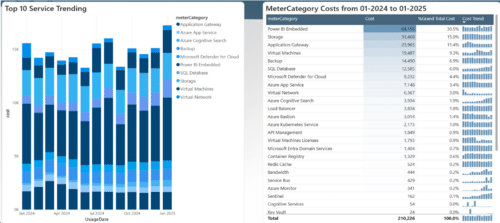
ealth check, Surveil displayed a world map of login locations. The IT manager immediately spotted logins from Belarus – a major red flag: “You could see the blood drain from the face of the IT manager… ‘We need to stop the call. I need to deal with that now.'” Visibility isn’t just about cost; it’s about security, compliance and operational awareness.
Once you understand your environment, you can begin Azure cost management in earnest by reducing waste. This includes identifying underused resources, over-provisioned virtual machines and redundant Microsoft 365 licences. For example, the tool can detect when an E5 user isn’t using key features and recommend a downgrade to M2 or E3. Governance then ensures these savings stick over time through blueprinting, automated alerts and anomaly detection. As Stuart explained: “If those standards are not being deployed against, report it back to me or alert me.” This is where ERGOS’s account management model shines – with monthly or quarterly reviews, our team can proactively surface insights, highlight risks and help clients stay on track.
Using Microsoft 365 license management to support IT and Finance
Cloud optimisation isn’t just a technical exercise; it’s a financial one. Increasingly, finance teams are becoming direct users of optimisation tools because, as Stuart noted: “We see partners selling this tool to the finance team… because it’s speaking their language.”
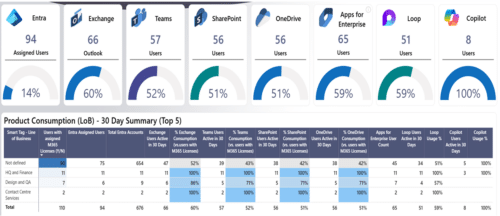
Effective Microsoft 365 license management supports both sides of the business. For IT managers, it provides automated recommendations for right-sizing and the data needed to justify technical decisions. For finance directors, it offers transparent cost breakdowns, heat-mapped Azure billing summaries and departmental chargebacks via smart tagging. One FD reportedly ended a demo early after seeing Surveil’s Azure heat map: “The FD just goes, ‘I’ve seen enough.'” Because for finance leaders, clarity is everything.
|
For IT Managers |
For Finance Directors |
|
Clear visibility of Azure and Microsoft 365 usage |
Transparent cost breakdowns |
|
Automated recommendations for right-sizing |
Heat-mapped Azure billing summaries |
|
Alerts for security anomalies |
Departmental chargeback via smart tagging |
|
Insights into adoption and collaboration patterns |
Forecasting based on real usage |
|
Data to justify technical decisions |
Identification of waste that can be reinvested |
The rise of AI – and why optimisation matters even more
AI adoption is accelerating across UK businesses, and with it comes a new layer of cloud consumption. Tools like Microsoft Copilot and Azure OpenAI introduce entirely new cost models, from token usage to automated resource creation. As Stuart explained: “You are starting to see the bill shocks happen… because an agent can spin up resources in Azure.”
To help businesses stay ahead of these costs, Surveil has introduced AI Manager. This module helps with AI cost management by tracking:
- Token consumption across AI workloads
- Agent-driven resource creation
- Azure costs associated with AI requests
- Adoption and value realisation for tools like Copilot
This visibility is essential. Without it, organisations risk paying for AI activity they didn’t even know was happening.
Caveman Mode: a surprising optimisation insight
One of the most unexpected findings from Surveil’s AI tracking relates to a trend known as Caveman Mode – a stripped-back prompting style that removes the “warm, fluffy responses” from large language models. As Stuart described: “It takes out all the warm, fluffy responses… and just gives you very straight answers.”
Originally created as a bit of fun, Caveman Mode has revealed something far more valuable: it dramatically reduces token consumption. Surveil’s data shows that organisations using this mode can see up to an 85% reduction in AI resource costs. By limiting the model’s conversational replies, businesses use fewer tokens, making AI more predictable and affordable. It isn’t just a novelty – it’s a practical optimisation strategy that aligns perfectly with FinOps principles.
How ERGOS and Surveil work together to support UK businesses
ERGOS integrates Surveil into our managed service offering to give clients continuous optimisation and clear reporting for both IT and finance. We focus on:
- Licence and adoption analysis for Microsoft 365
- Security insights and anomaly detection
- AI consumption tracking and token management
- Proactive account management conversations
This aligns perfectly with our mission: helping UK businesses stay secure, efficient and in control of their technology. Learn more about our cloud services.
Learn more about our cloud services at: https://www.ergos.uk/cloud-services
FAQs
Why is our Microsoft cloud bill so much higher than we expected?
Cloud costs are elastic and can spiral quickly without continuous monitoring. Common causes include licence drift – where you pay for features you don’t use – and over-provisioned Azure resources that continue running when they aren’t needed.
How can I demonstrate to our Finance Director that we’re getting value from IT spend?
By moving away from spreadsheets and presenting heat-mapped billing summaries and departmental chargebacks instead. This gives finance teams the transparent, easy-to-read data they need to understand exactly where every pound is going.
Can we reduce our Microsoft 365 costs without affecting productivity?
Yes. By identifying users on premium licences like E5 who only use basic features, you can move them to M2 or E3 without changing their daily workflow. Most SMEs find significant savings simply by right-sizing their licence estate.
What is the easiest way to avoid bill shock when rolling out Microsoft Copilot?
Start with visibility. Tracking token consumption and monitoring agent-driven resource creation ensures you only pay for the value you’re actually receiving – and using more direct prompting styles like Caveman Mode can reduce AI resource costs by up to 85%.
To understand more about how we can help to reduce your spend, optimise your cloud capabilities and secure your systems, contact us here.